When Is the Best Time to Golf in Hawaii? (Season-by-Season Guide)
Introduction
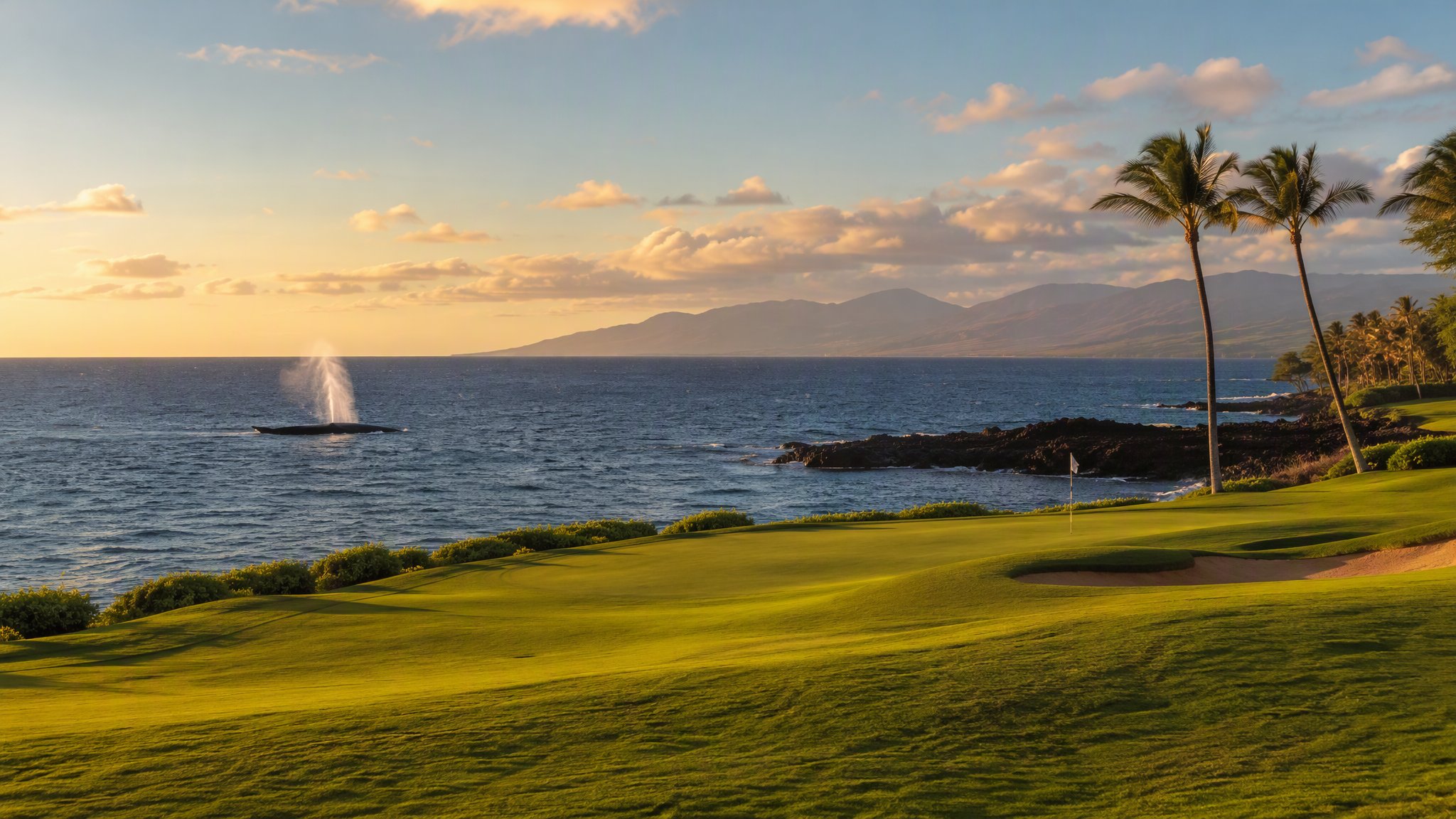
The best time to golf in Hawaii is late April through mid-June and September through early December — dry-season weather, smaller crowds, and open tee sheets. Winter (December–March) adds whale watching from oceanfront fairways but brings more windward rain and peak holiday demand. Summer is dry, warm, and breezy in the afternoons.
Here's the honest truth: there is no bad month to golf in Hawaii. Daytime highs sit between 80 and 88°F all year, courses never close for weather season, and the trade winds blow almost every afternoon. What changes by month is rain (wet season November–March on the windward sides), crowds (Christmas, spring break, summer), price pressure at peak times, and — from November to April — the chance to watch humpback whales breach between shots. Below is the season-by-season breakdown, a month-by-month table, and the best windows per island. Whenever you come, compare tee times on golfscape for live availability across the islands.
Hawaii's Golf Seasons at a Glance
| Season | Months | Weather | Crowds | Golf Verdict |
|---|---|---|---|---|
| Winter | Dec–Mar | Cooler (low 80s), windward showers | Peak (holidays + whale season) | Spectacular but busy — book ahead |
| Spring | Apr–May | Drying out, mild | Moderate | Sweet spot #1 |
| Summer | Jun–Aug | Hottest, driest, windy afternoons | High (families) | Early tee times win |
| Fall | Sep–Nov | Warm, calm mornings, showers return late | Lightest | Sweet spot #2 — best deals |
Hawaii doesn't observe daylight saving time, so sunrise and sunset barely move: sunset ranges from about 5:45 PM in December to about 7:15 PM in June. That matters for twilight golf — summer afternoons allow a full 18 after 2 PM, while winter twilight rounds can get cut short.
Month-by-Month: Golf Conditions in Hawaii
| Month | Weather | Crowds | Golf Notes |
|---|---|---|---|
| January | Cooler, windward showers | Peak (New Year spillover) | Whale season peak; Champions events at Hualalai & Waialae close those courses for a week |
| February | Coolest month, occasional storms | High | Whales everywhere offshore; prime resort conditions |
| March | Showers tapering | Spring-break bump | Great golf + late whale season |
| April | Drying out, mild | Moderate | Shoulder season begins; spring aeration at some resorts |
| May | Dry, warm | Light–moderate | One of the two best months of the year |
| June | Dry, trades building | Summer families | Longest days — full twilight rounds possible |
| July | Hottest, driest | High | First-tee-time strategy; afternoon trades strong |
| August | Hot, humid spells | High | Hurricane season watch (rarely disruptive) |
| September | Warm, calm mornings | Light | Fall aeration closures; best availability of the year |
| October | Warm, showers return late | Light | Second sweet spot; ocean at its warmest |
| November | Wet season begins | Moderate (Thanksgiving bump) | First humpback whales arrive |
| December | Wettest month, mild | Peak from mid-month | Whale season opens; book holiday tee times weeks out |
Winter (December–March): Whale Season Golf
Winter is Hawaii's most famous golf season for two reasons: escaping mainland snow, and humpback whales. Roughly 10,000 humpbacks migrate from Alaska to Hawaiian waters each year, with the official season running November through April and the peak January through March (NOAA's Hawaiian Islands Humpback Whale National Marine Sanctuary). On oceanfront courses — Kona Country Club, Mauna Lani South, Poipu Bay, Kapalua's Plantation Course — spouts and breaches mid-round are a realistic expectation, not a brochure fantasy. Maui's Au'au Channel is the densest whale water in the state.
The trade-offs: windward courses (Princeville, Hilo, windward Oahu) catch most of the season's rain, Christmas through New Year's is the busiest tee-sheet window of the year, and January's tournament week used to complicate Kapalua. That's changed: the PGA Tour's Hawaii swing ended after 2026 — The Sentry was canceled in January 2026 amid Maui's drought and moves to Torrey Pines in 2027, while Waialae's event becomes the Sony Championship Hawaii on the PGA Tour Champions. The practical takeaway for visitors: the Plantation Course at Kapalua now stays open to regular play through January, and the only January tournament closure to plan around is the Mitsubishi Electric Championship at Hualalai on the Big Island (Four Seasons guests only anyway).
Winter tips: book holiday-week tee times as soon as windows open (30–60 days at most resorts), favor leeward courses (Kohala Coast, Poipu, Wailea, Ko Olina) on stormy forecasts, and bring a layer for 7 AM tee times — winter mornings can start in the mid-60s.
Spring (April–May): The First Sweet Spot
Ask Hawaii golf staff when they'd play, and most say May. The wet season has ended, the winter crowds have gone home, the whales linger into mid-April (officially to mid-May), and courses are in peak condition after a winter of recovery. Hotel and flight prices soften noticeably after Easter week.
One watch-out: spring is aeration season at some resorts — a few courses punch greens in April or May (Hapuna on the Big Island aerated April 22–23, 2026, for example). Check the course page or call the shop if pristine greens matter to your round; the work is usually finished in two or three days and discounted rates sometimes apply right after.
Summer (June–August): Dry, Warm & Breezy
Summer is the driest, sunniest stretch — and the windiest. Trade winds strengthen in the afternoons, routinely 15–25 mph, which turns exposed courses into a second round of club selection. Morning tee times are gold: calmer air, cooler temps, faster greens. The payoff for afternoon play is twilight pricing plus daylight past 7 PM, so a 2 PM start comfortably finishes 18 holes.
Expect highs of 85–88°F and real humidity. Heat management matters: hydrate before you're thirsty, reapply sunscreen at the turn (we pack Neutrogena Sport Face SPF 70), and a Frogg Toggs Chilly Pad on the cart rail is the local move. Central Pacific hurricane season runs June 1 to November 30 — direct hits are rare, but keep an eye on forecasts the week you fly.
Fall (September–November): The Second Sweet Spot
Early fall is Hawaii golf's best-kept secret: families are back in school, tee sheets are the most open of the year, and the ocean is at its warmest for the post-round swim. September and October deliver calm, glassy mornings — the best whale-less golf weather of the year.
Two fall quirks to plan around. First, aeration and maintenance closures cluster in September: Princeville Makai on Kauai was closed most of September 2026 (reopening September 29 with 20% off reopening tee times), and other courses schedule similar short closures. Second, the tail of hurricane season occasionally brushes the islands — Hurricane Lowell briefly closed Kauai courses in September 2026. Both are short-lived; both are reasons to confirm course status a few days before a September round. The first humpback whales typically arrive in November, and whale season officially opens in December.
The Best Time to Golf Each Island
- Oahu: Year-round, with May and October the standouts. Leeward courses (Ko Olina area) stay dry when windward layouts catch showers. See our Oahu golf guide.
- Maui: April–May and September–November. Winter is whale season in the Au'au Channel — visible from Kapalua and Ka'anapali — but also Kapalua's windiest stretch. Our Maui golf guide has the region-by-region breakdown.
- Big Island: The Kohala Coast is the driest golf corridor in the state — playable virtually 365 days a year. Hilo-side courses are best May–October. Details in the Big Island golf guide.
- Kauai: Poipu (South Shore) is the year-round sun belt; Princeville is at its best May–October when North Shore rain backs off. More in the Kauai golf guide.
The Best Time of Day to Golf in Hawaii
Whatever the month, the daily pattern is the same: mornings are cooler, calmer, and quicker; afternoons are windier but cheaper. Twilight rates cut 25–50% at most resort courses, starting anywhere from 11 AM (Waikoloa Village) to 3 PM (Kiahuna). In summer you can finish a full round on a twilight tee time; in winter you're racing a 5:45 PM sunset. Rain gear earns its bag space from November to March on windward courses — a compact Repel Windproof umbrella handles the passing squalls.
Flying in for a peak holiday or whale-season week? That's when airline baggage lines and bag fees peak too — frequent Hawaii visitors ship clubs ahead with Ship Sticks and travel light.
Frequently Asked Questions
What is the best month to golf in Hawaii?
May is the best single month: dry-season weather, post-whale-season calm, thin crowds, and courses in peak condition. October is a close second — warm, quiet, and the most open tee sheets of the year.
Can you golf in Hawaii in the winter?
Absolutely — winter is peak season. Expect daytime highs around 80°F, occasional windward rain showers, and humpback whales visible from oceanfront courses November through April. Book holiday-week tee times well in advance.
What is the rainiest month for golf in Hawaii?
December through March is the wet season, with February typically the coolest. Rain falls mostly on windward (north/east-facing) coasts — leeward resort areas like the Kohala Coast, Poipu, Wailea, and Ko Olina stay dry most winter days.
Is summer too hot for golf in Hawaii?
No — but it's warm and windy. Highs reach 85–88°F with strong afternoon trade winds. Play early, hydrate, and use the long July daylight to your advantage: twilight rounds starting after 2 PM still finish 18 holes.
When is hurricane season in Hawaii, and should golfers worry?
Central Pacific hurricane season runs June 1 through November 30. Direct hits are rare — the typical impact is a one- or two-day course closure for a passing storm (as with Hurricane Lowell in September 2026). Don't cancel a trip over it; do check forecasts the week you travel.
When can you see whales while golfing in Hawaii?
November through April, peaking January through March. Oceanfront courses on Maui's west side, the Big Island's Kohala Coast, and Kauai's South Shore offer the best mid-round sightings — no boat required.
Plan Your Hawaii Golf Trip
Every season works — the question is which trade-offs you prefer: whales and buzz in winter, value and calm in the shoulder months, or long sunny days in summer. Start with live availability and compare tee times on golfscape, then dig into our island guides for Oahu, Maui, the Big Island, and Kauai — and the budget math in our Hawaii golf trip cost guide.
Hawaii Golf Guide is reader-supported. When you book or buy through links on our site — including golfscape and Amazon — we may earn an affiliate commission at no extra cost to you. Event dates and course schedules change; details here were verified as of October 2026.
Never Miss a Post
Subscribe for the latest Hawaii golf guides and course reviews.
Plan Your Hawaii Golf Trip
Browse all 80+ golf courses across the Hawaiian Islands and find the perfect courses for your vacation.
Explore Courses